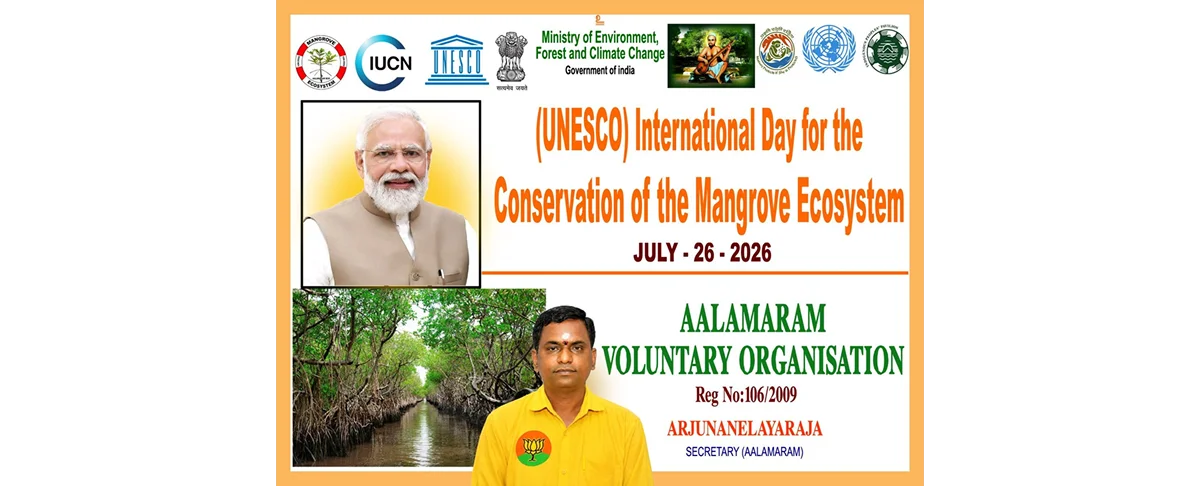

Mangrove Ecosystems: Nature’s Living Shield Against Climate Change and Coastal Disasters
A Community-Based Conservation Initiative by AALAMARAM NGO, India
Introduction
Along the meeting point of land and sea, mangrove ecosystems stand as one of nature’s most powerful protective systems. These unique coastal forests act as a natural shield against climate change, coastal disasters, and environmental degradation. They protect shorelines, support marine biodiversity, store significant amounts of carbon, and provide sustainable livelihoods to millions of coastal communities worldwide.
Although mangroves cover less than one percent of the world’s tropical forests, their ecological importance is far greater than their size suggests. These forests provide valuable ecosystem services worth billions of dollars annually by protecting coastlines from erosion, supporting fisheries, improving water quality, and helping regulate the global climate.
However, mangrove ecosystems are disappearing at an alarming rate due to rapid industrialization, urban expansion, pollution, unsustainable aquaculture practices, and climate change. The destruction of these coastal forests threatens biodiversity and leaves millions of people more vulnerable to cyclones, storm surges, flooding, rising sea levels, and shoreline erosion.
Recognizing the importance of these ecosystems, the United Nations declared 26 July as the International Day for the Conservation of the Mangrove Ecosystem to encourage global efforts toward mangrove protection and restoration.
One inspiring example of community-driven conservation comes from AALAMARAM NGO, established in 2009 in Cuddalore District, Tamil Nadu, India. The organization has dedicated itself to restoring degraded mangrove habitats through environmental awareness, volunteer participation, and community-based conservation initiatives.
Without depending on government grants, AALAMARAM NGO has successfully involved local youth and villagers in mangrove restoration activities. Through continuous efforts, the organization has planted and protected more than 250,000 mangrove saplings along the Uppanar River and nearby coastal wetlands.
This conservation journey highlights how local communities can play a crucial role in protecting natural ecosystems and contributing towards global sustainability goals.
Understanding Mangrove Ecosystems
Mangroves are specialized salt-tolerant trees and shrubs that grow naturally along tropical and subtropical coastlines, especially in regions where freshwater rivers merge with seawater. Unlike ordinary forests, mangroves survive in extreme environmental conditions, including saline water, oxygen-deficient soils, tidal flooding, and unstable coastal sediments.
These remarkable plants have developed unique adaptations to survive in challenging coastal environments. Their complex root systems help them remain stable during strong tides and waves, while their specialized structures allow them to filter and tolerate high levels of salt.
More than 70 species of true mangroves exist across the world, creating diverse habitats for thousands of marine and terrestrial species, including fish, crabs, molluscs, birds, reptiles, insects, and mammals.
Mangroves are not isolated forests; they are interconnected ecosystems that connect rivers, estuaries, wetlands, seagrass areas, coral reefs, and oceans. The health of these ecosystems directly influences coastal ecological balance and marine productivity.
Why Mangrove Ecosystems Are Important
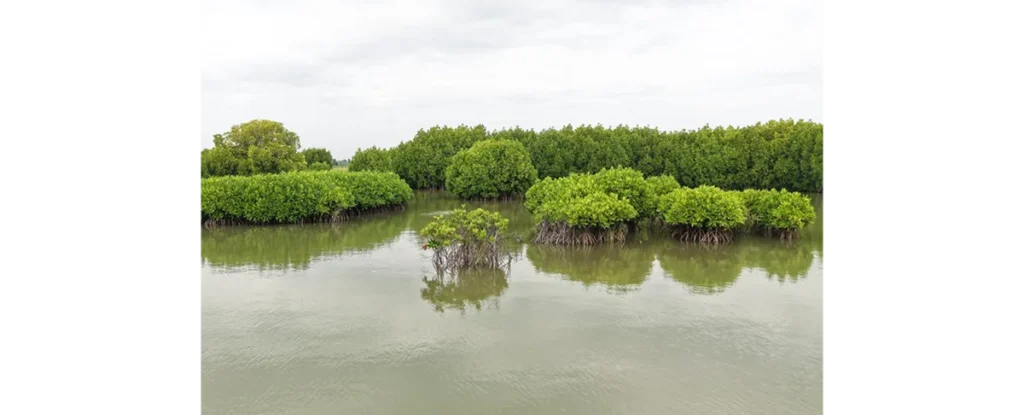
Natural Solution Against Climate Change
Mangroves are among the most effective natural carbon storage systems on Earth. They absorb carbon dioxide from the atmosphere through photosynthesis and store large amounts of carbon in their roots, trunks, and surrounding soils.
This stored carbon, often referred to as Blue Carbon, remains trapped for centuries, making mangrove conservation an important solution for reducing greenhouse gas emissions and addressing climate change.
Protecting Coastal Communities
Mangrove forests act as natural barriers against coastal disasters. Their dense root networks reduce wave energy, stabilize sediments, prevent erosion, and protect coastal settlements from cyclones and storm surges.
Unlike artificial coastal barriers, mangroves continue to grow and strengthen over time. They help coastlines adapt naturally by trapping sediments and supporting land formation.
Supporting Biodiversity
Mangrove ecosystems provide essential habitats for numerous species. Fish, prawns, crabs, shellfish, and other marine organisms depend on mangrove areas as breeding and nursery grounds.
Many coastal fisheries rely on healthy mangrove forests, making their conservation important for food security and local economies. Migratory birds also depend on mangrove wetlands for feeding and nesting.
Improving Water Quality
Mangrove roots naturally trap sediments, absorb excess nutrients, and filter pollutants before they reach sensitive marine ecosystems such as coral reefs and seagrass habitats.
By improving water quality, mangroves help maintain the overall health of coastal environments.
Mangroves of India: A Valuable Natural Heritage
India is home to some of the world’s most important mangrove ecosystems, spread across approximately 4,900 square kilometres of coastline. These forests are found along the eastern and western coasts as well as the Andaman and Nicobar Islands.
Major mangrove regions include the Sundarbans of West Bengal, Bhitarkanika in Odisha, Godavari and Krishna deltas in Andhra Pradesh, Gulf of Kachchh in Gujarat, and Pichavaram and Muthupet mangroves in Tamil Nadu.
These ecosystems protect biodiversity, support fisheries, strengthen coastal resilience, and contribute to climate change mitigation. However, increasing industrial activities, pollution, land conversion, and rising sea levels continue to threaten their survival.
AALAMARAM NGO’s Conservation Efforts Along the Uppanar River
The Uppanar River in Cuddalore, Tamil Nadu, represents an important estuarine ecosystem where freshwater meets the Bay of Bengal. The surrounding wetlands provide suitable conditions for mangrove growth and support various coastal species.
For generations, local communities have depended on this ecosystem for fishing, crab harvesting, shellfish collection, and other traditional livelihoods.
However, industrial growth, pollution, plastic waste, untreated wastewater, and land-use changes have created significant environmental challenges in the region.
Understanding the urgent need for restoration, AALAMARAM NGO initiated mangrove conservation efforts along the Uppanar River in 2009. Through plantation drives, maintenance activities, environmental education, and community participation, the organization has worked continuously to restore ecological balance in the region.
Mangroves: A Natural Shield for the Future
In an era of increasing climate challenges, mangroves represent hope, resilience, and sustainability. Rising temperatures, stronger cyclones, sea-level rise, and coastal flooding threaten communities around the world, but mangrove ecosystems provide a natural defence mechanism.
Their ability to store carbon, protect coastlines, support biodiversity, and strengthen local livelihoods makes them one of the most valuable ecosystems on the planet.
The conservation work of organizations like AALAMARAM NGO demonstrates that protecting nature is not only the responsibility of governments or institutions. Communities, volunteers, and individuals can collectively create meaningful environmental change.
By restoring and protecting mangrove forests today, we can safeguard coastal communities, preserve biodiversity, and build a more sustainable future for generations to come.