
Cervical Pain: Why Your Neck Still Hurts Even After Improving Your Posture
You’ve Fixed Your Posture—So Why Hasn’t the Pain Gone Away?
You’ve made all the recommended changes.
Your monitor is now at eye level. You’ve invested in an ergonomic chair, replaced your pillow, and consciously remind yourself to sit upright throughout the day.
Yet by evening, your neck still feels stiff, heavy, or painful.
If this sounds familiar, you’re not alone.
Many people believe that correcting posture is the ultimate solution to neck pain. While improving posture is undoubtedly beneficial, it’s often only one piece of a much larger puzzle. The reality is that the human body is far more complex than simply sitting “correctly.”
Good ergonomics can reduce unnecessary strain, but reducing strain is not the same as restoring your body’s ability to function efficiently.
Is Neck Pain Really Just a Posture Problem?
In today’s digital world, posture has become the common culprit for almost every episode of neck discomfort.
Social media, advertisements, and even well-intentioned advice frequently suggest that forward head posture or long hours at a desk are solely responsible for cervical pain. As a result, people rush to buy ergonomic chairs, standing desks, cervical pillows, laptop stands, and posture correctors.
These changes can certainly improve comfort and reduce excessive stress on the neck. However, countless individuals continue to experience persistent pain despite making every ergonomic adjustment possible.
If posture alone caused neck pain, correcting it would solve the problem for everyone. Clearly, that’s not always the case.
Your Cervical Spine Is Built to Move—Not Just Stay Straight
Your cervical spine does much more than support the weight of your head.
Every moment of the day, it works alongside your muscles, joints, nervous system, vision, and breathing patterns to help you move, balance, and respond to the demands of everyday life.
For this system to function effectively, several important elements must work together:
- Healthy mobility without excessive stiffness
- Stable joints during movement
- Strong muscular endurance
- Smooth movement coordination
- The ability to tolerate repeated physical demands
When one or more of these abilities decline, pain may continue—even if your posture has improved significantly.
This explains why two people with nearly identical workstations can have completely different experiences. One finishes the day pain-free, while the other struggles with ongoing neck discomfort.
Why Ergonomic Improvements Aren’t Always Enough
Adjusting your workstation is a smart first step, but it’s important to understand what ergonomics actually accomplishes.
Ergonomics changes your environment.
Rehabilitation changes your body’s capacity.
A better chair cannot restore weakened muscles. A standing desk cannot improve movement control, and the perfect pillow won’t automatically rebuild endurance or confidence in movement.
When the neck loses its ability to tolerate daily activities, symptoms often return during busy workdays, long drives, exercise, travel, or even extended periods of concentration.
Instead of asking:
“Is my chair causing my pain?”
A more meaningful question becomes:
“Is my neck physically prepared for the demands I place on it every day?”
The Importance of Building Capacity
One of the most valuable concepts in modern rehabilitation is understanding that pain doesn’t always indicate ongoing damage.
In many cases, persistent pain reflects a mismatch between what your body is being asked to do and what it is currently capable of handling.
Consider the different demands placed on the cervical spine by:
- A software engineer working ten-hour days
- A surgeon performing lengthy procedures
- A business executive attending back-to-back meetings
- An athlete returning to competitive sport
Each individual places unique physical demands on the neck, yet all require one essential quality—a cervical spine capable of handling those demands confidently.
The objective of rehabilitation isn’t simply to eliminate pain. It’s to restore the body’s ability to perform everyday activities with resilience and confidence.
Restoring Function Instead of Chasing Perfect Posture
The LCMSC–Sharma Protocol approaches cervical rehabilitation from a functional perspective rather than focusing solely on posture correction.
Instead of encouraging people to hold themselves rigidly in an ideal position, the protocol emphasizes developing qualities that allow the neck to move and adapt naturally throughout daily life.
Its rehabilitation framework focuses on improving:
- Load management
- Movement quality
- Stability during movement
- Functional mobility
- Neuromuscular coordination
- Overall physical capacity
After all, the human body wasn’t designed to remain perfectly still—it was designed to move.
When Neck Pain Requires Medical Attention
Although many cases of cervical pain respond well to appropriate rehabilitation, certain symptoms should never be ignored.
Seek prompt medical assessment if neck pain is accompanied by:
- Significant trauma or injury
- Progressive weakness
- Loss of coordination or balance
- Changes in bowel or bladder function
- Persistent numbness affecting daily activities
- Fever, unexplained weight loss, or other systemic symptoms
- Rapidly worsening neurological signs
Rehabilitation should complement proper medical care—not replace it.
Building a Stronger, More Resilient Neck
Temporary pain relief is valuable, but long-term resilience is even more important.
Rather than becoming dependent on ergonomic equipment or short-term symptom management, the goal should be to restore a cervical spine that can confidently handle the physical demands of work, travel, exercise, and everyday life.
Better posture can certainly reduce unnecessary strain.
But lasting improvement comes from developing movement capacity, increasing load tolerance, and rebuilding confidence in how your body performs.
Because true rehabilitation isn’t about maintaining one perfect position.
It’s about restoring your ability to move well—comfortably, confidently, and consistently—for years to come.
About Pawan Sharma
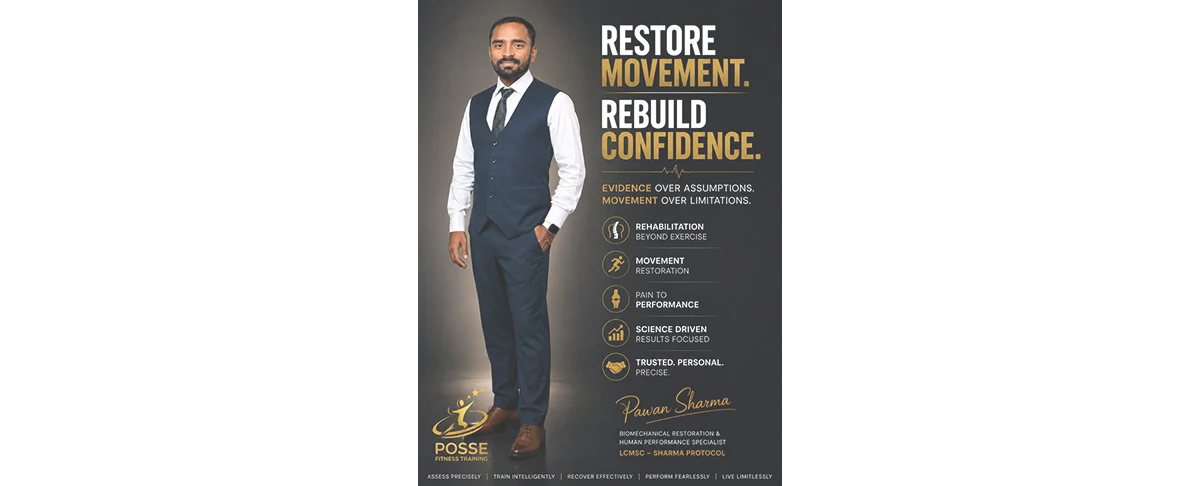
Pawan Sharma is a Biomechanical Restoration & Human Performance Specialist and the creator of the LCMSC–Sharma Protocol. Through Posse Fitness Training, he helps individuals restore movement, improve physical performance, and recover using evidence-informed rehabilitation strategies centered on biomechanics, progressive load management, and functional capacity development. His approach emphasizes individualized care while working alongside appropriate medical pathways whenever necessary.